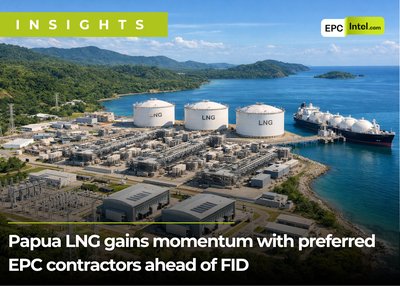
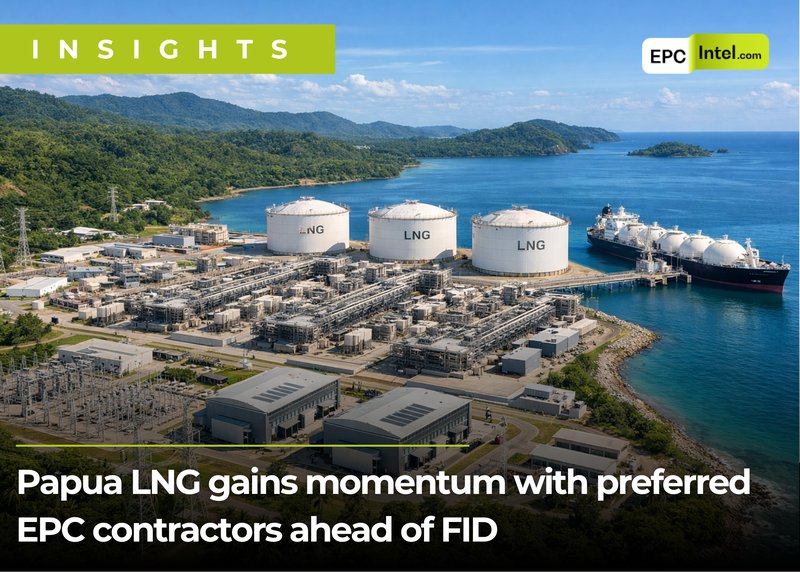
Papua New Guinea is quietly lining up its next LNG expansion, and the selection of a JGC and Hyundai E&C joint venture as preferred EPC contractor signals that Papua LNG is moving closer to a 2026 FID. For EPC players, this is one of the most relevant near term liquefaction opportunities globally, not just because of its size, but because of its low carbon design philosophy and strong sponsor group led by TotalEnergies.
The project centers on a 4 MTPA LNG plant near Port Moresby, fed by the Elk Antelope gas fields. While smaller than recent mega LNG projects in Qatar or the US, it fits squarely into the current wave of mid scale, capital disciplined developments that are easier to finance and execute.
EPC positioning favors LNG incumbents
The selection of JGC and Hyundai E&C is not surprising. JGC brings deep LNG pedigree, having delivered the original PNG LNG liquefaction plant back in 2009, while Hyundai continues to build momentum across global LNG EPC and module execution.
From an EPCIntel lens, this is a classic “incumbent advantage” play. Brownfield adjacency, local execution experience, and proven LNG train delivery remain decisive in contractor selection, especially in frontier markets like Papua New Guinea where logistics and execution risk are elevated.
The fact that the JV is still labeled as “EPC contractor candidate” suggests commercial negotiations are ongoing, with pricing, risk allocation, and schedule guarantees likely still being refined ahead of FID.
Low carbon design reshapes package demand
One of the most important technical shifts in Papua LNG is the use of electric drive compression, replacing conventional gas turbine driven refrigerant systems. This has a direct impact on both EPC scope and supplier landscape.
Electric drive LNG plants shift value away from gas turbine OEMs toward power infrastructure, high voltage systems, and electric motor suppliers. This opens opportunities for:
- High voltage electrical systems and substations
- Large scale electric motor and compressor integration
- Grid or captive power generation infrastructure
- Advanced control and digital optimization systems
This design choice aligns with TotalEnergies’ broader push toward lower emissions LNG, and mirrors trends seen in projects like Qatar’s North Field Expansion.
Capital spend breakdown and EPC opportunity
Based on EPCIntel.com benchmarking for a 4 MTPA LNG plant, total EPC value is likely in the range of $4.5 billion to $6 billion, depending on electrification scope and local infrastructure requirements.
Typical capital allocation across major packages would break down as follows:
- Liquefaction trains and process systems, 35 to 40%
- Utilities and offsites, 15 to 20%
- Power generation and electrical systems, 15 to 20%
- Storage and loading facilities, 10 to 15%
- Marine works and logistics infrastructure, 5 to 10%
- Buildings, camp, and site infrastructure, 5 to 8%
The electrified configuration could push the electrical and power segment toward the higher end of the range, creating additional opportunities for specialist electrical EPCs and OEM suppliers.
Supply chain and subcontracting outlook
For subcontractors and suppliers, Papua LNG presents a familiar LNG value chain with a few notable twists.
Module fabrication will likely be split between Asian yards, with Hyundai potentially leveraging Korean fabrication capacity, while also integrating regional yards depending on logistics strategy. Heavy lift, transport, and installation scopes will be critical given Papua New Guinea’s infrastructure constraints.
Key subcontracting opportunities are expected across:
- Cryogenic heat exchangers and LNG process equipment
- Modular fabrication yards in Korea, China, and Southeast Asia
- Marine jetty and loading infrastructure contractors
- Electrical systems integrators and HV equipment suppliers
- Construction services and workforce accommodation
Local content will also play a role, although execution will remain heavily reliant on international contractors due to the project’s complexity.
Timing and competitive landscape
With FID expected in 2026, the project sits in a competitive global LNG queue alongside developments in the US Gulf Coast, Qatar expansion phases, and emerging African projects.
However, Papua LNG benefits from strong sponsor alignment and existing LNG infrastructure in country, which reduces execution risk relative to greenfield frontier developments.
If FID proceeds on schedule, early works and procurement could begin shortly after, with first LNG likely targeted toward the end of the decade.
EPCIntel.com takeaway
Papua LNG is not the largest project in the global pipeline, but it is one of the most strategically positioned. It combines manageable scale, strong sponsors, and a clear low carbon narrative that aligns with current financing and regulatory expectations.
For EPC contractors, the message is clear. LNG awards are consolidating around experienced players with proven delivery records. For suppliers, the shift toward electrified LNG is creating a new layer of opportunity, particularly in power and electrical systems.
As FID approaches, Papua LNG is shaping up to be one of the key EPC awards to watch in 2026, with a supply chain footprint that will extend well beyond Papua New Guinea.