Saudi Arabia’s gas investment pipeline keeps getting bigger.
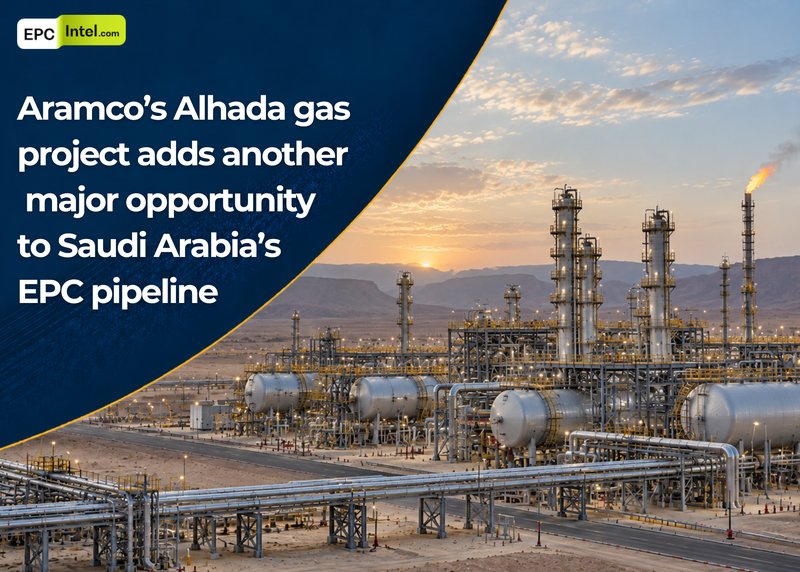
The proposed expansion of Saudi Aramco’s Alhada Gas Processing Plant is shaping up as another major downstream opportunity for EPC contractors, equipment suppliers and specialist subcontractors targeting the Kingdom’s rapidly growing gas market.
The project is expected to include three major EPC packages covering the main gas processing facilities, sulphur recovery units and utilities infrastructure.
For the supply chain, that means opportunities across almost every major package required for a large sour gas processing development.
A substantial gas processing scope
The largest part of the development is expected to be the main gas processing package.
Current plans include three gas processing trains, three acid gas removal units, TEG dehydration, flare systems, flare gas recovery facilities, burn pits and associated process infrastructure.
That immediately creates a substantial addressable market for process equipment suppliers.
Typical procurement requirements should include compressors, separators, columns, pressure vessels, heat exchangers, pumps, filtration systems, process skids, piping, valves and instrumentation.
Acid gas removal and dehydration systems will also create opportunities for specialist technology providers, packaged equipment suppliers and licensors.
Sulphur recovery will be another major workstream
A separate package is expected to cover sulphur recovery.
For Saudi gas developments, this can represent a sizeable portion of the overall equipment spend due to the scale and complexity of treating sour gas streams.
Major supply packages could include reaction furnaces, waste heat boilers, sulphur condensers, reheaters, incinerators, sulphur pits, sulphur handling systems and associated rotating equipment.
Specialist engineering and technology providers with established references in sulphur recovery could therefore have a meaningful role in the project.
Utilities create another large supplier market
The third major package covers common utilities and supporting facilities.
This part of the project is likely to create opportunities across electrical systems, substations, water treatment, cooling systems, storage, compressed air, nitrogen systems, buildings, structural steel and broader balance-of-plant infrastructure.
Utility packages rarely attract the same attention as the main process facilities, but they can account for a significant proportion of total project expenditure.
For subcontractors and suppliers, this is also typically where a large number of secondary procurement packages emerge.
Where the capital could be spent
Aramco has not disclosed a project value.
However, based on comparable gas processing projects tracked by EPCIntel.com, a development with three processing trains, dedicated sulphur recovery and a substantial utilities scope could reasonably develop into a multi-billion-dollar EPC programme.
A potential capital range of around $2.5 billion to $4 billion would not be unusual for a project of this scale, although this should be treated as an EPCIntel estimate rather than an announced value.
A typical spend profile could see roughly 55% to 65% directed toward the main gas processing facilities, 15% to 20% toward sulphur recovery and approximately 20% to 25% toward utilities and infrastructure.
That would place the largest equipment opportunities firmly around process systems, rotating equipment, pressure vessels, heat exchangers, piping, valves and E&I.
Another project in Aramco’s gas expansion wave
Alhada is important because it is not an isolated investment.
Aramco is targeting an approximately 80% increase in sales gas production capacity by 2030 compared with 2021 levels, making gas one of the largest areas of capital deployment in Saudi Arabia over the remainder of the decade.
Large projects such as Jafurah, Tanajib and other gas processing developments are already creating a deep procurement market across the Kingdom.
Alhada adds another sizeable project to that pipeline.
The opportunity goes far beyond the headline EPC packages
The most important point for suppliers is that the value of Alhada will not stop with the main EPC contractors.
Once the project moves into execution, billions of dollars of expenditure can flow into equipment supply, fabrication, packaged systems and specialist construction subcontracting.
Compressors, vessels, sulphur systems, electrical equipment, instrumentation, piping, valves, structural steel and utility systems are all likely to represent meaningful procurement categories.
For companies targeting Saudi Arabia’s gas sector, Alhada is another project worth putting on the radar early.
Aramco’s gas buildout is becoming less about one or two giant developments and more about a sustained pipeline of processing plants, infrastructure and supporting facilities.
Alhada looks set to become another important piece of that investment cycle.