PTTEP has taken FID on the Bussabong gas development in Thailand, but the interesting part for contractors is not the initial 30 MMscf/d of production. It is the development model behind it.
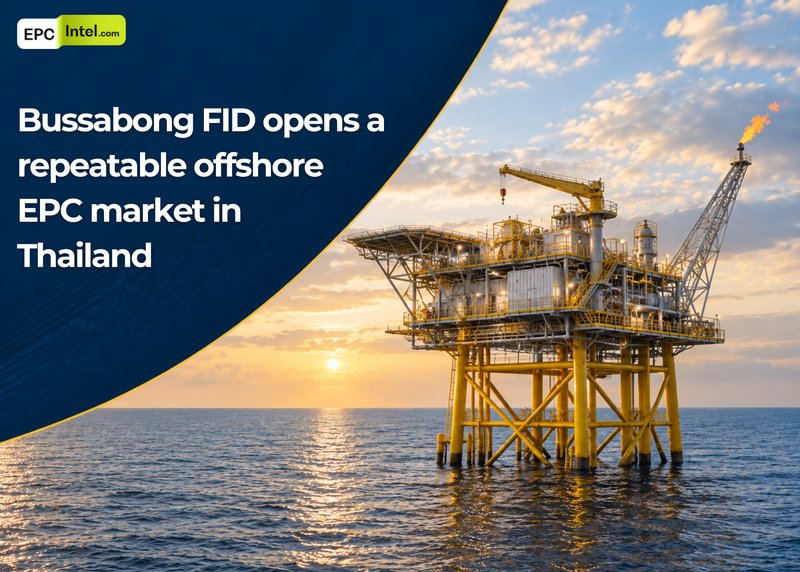
Bussabong Phase 1 will install two 24-slot wellhead platforms, drill 25 development wells and connect the field to PTTEP’s existing Bongkot infrastructure through a 9 km, 12-inch subsea pipeline. First gas is targeted around the end of 2028, with production expected at approximately 30 MMscf/d before increasing to around 40 MMscf/d in 2030.
And importantly, Valeura Energy is already describing Phase 1 as a repeatable template for the eventual wider development of Bussabong.
A relatively small project with a clear procurement map
The project is being deliberately kept simple.
Rather than installing a new central processing platform, Bussabong gas will be exported east to PTTEP’s existing Bongkot facilities in Block G2/61. Valeura says no additional processing capacity is required at Bongkot.
That dramatically reduces the capital bill.
Valeura expects approximately US$35 million of expenditure for facilities, installation and pipelines on its 40% share. That translates to roughly US$87.5 million gross.
Another US$20 million to US$25 million net is expected for the initial 25 development wells, implying gross drilling expenditure of approximately US$50 million to US$62.5 million.
Put together, Phase 1 points to an initial development budget of roughly US$138 million to US$150 million before any subsequent expansion phases.
Where the EPC money could go
Based on comparable shallow-water Gulf of Thailand developments tracked by EPCIntel, the US$87.5 million facilities, pipeline and installation budget could broadly translate into the following contracting market:
- Two wellhead platforms: approximately US$40 million to US$50 million covering jackets, topsides, piles, mechanical packages, E&I and fabrication
- Subsea pipeline and tie-ins: approximately US$10 million to US$15 million for the 9 km, 12-inch pipeline, risers, spools and connection equipment
- Marine installation and hook-up: approximately US$15 million to US$20 million covering platform transportation, jacket and topside installation, pipeline installation and offshore hook-up
- Engineering, controls and modifications: potentially US$10 million to US$15 million across detailed engineering, telecommunications, instrumentation, brownfield interfaces and Bongkot modifications
These are indicative EPCIntel.com package ranges rather than announced contract values, and scopes could be bundled differently under PTTEP’s contracting strategy.
The drilling campaign represents another substantial service market. Gross expenditure of US$50 million to US$62.5 million across 25 wells points to around US$2 million to US$2.5 million per development well on average, reflecting the highly standardised drilling and production model used in the Gulf of Thailand.
PTTEP’s supply chain has an advantage
This is not a project where suppliers should expect an exotic new platform design.
Valeura specifically says the wellhead platforms will use specifications consistent with numerous existing Gulf of Thailand facilities and expects the development to benefit from PTTEP’s established construction and maintenance supply chain.
PTTEP has spent decades refining this model. Its Gulf of Thailand operations continue to require new wellhead platforms, development wells, pipelines and maintenance work to sustain production. The company has also said that synergies across its offshore portfolio allow it to reduce costs in drilling, platform construction and installation, logistics and procurement.
For existing PTTEP vendors, Bussabong therefore looks like another opportunity to feed proven designs, fabrication capacity, offshore vessels, drilling services and equipment into an established development machine.
The bigger opportunity is after Phase 1
Two 24-slot platforms provide 48 available well slots, yet the initial programme calls for only 25 development wells.
That leaves considerable physical capacity for additional drilling if reservoir performance and further appraisal support expansion.
Valeura says Bussabong contains multiple fault-block compartments suited to phased development, while Thailand’s regulator has already approved a defined production area. Additional FIDs could follow as step-out exploration and appraisal better define the resource.
PTTEP is also preparing further exploration in G3/65, including the Nong Yao Northeast prospect.
So the first US$150 million is probably not the number contractors should focus on.
The bigger story is whether Bussabong becomes the latest repeatable Gulf of Thailand development programme, where standardized platforms, short pipelines and continuous drilling turn one relatively modest FID into several years of recurring offshore EPC and supplier work.