
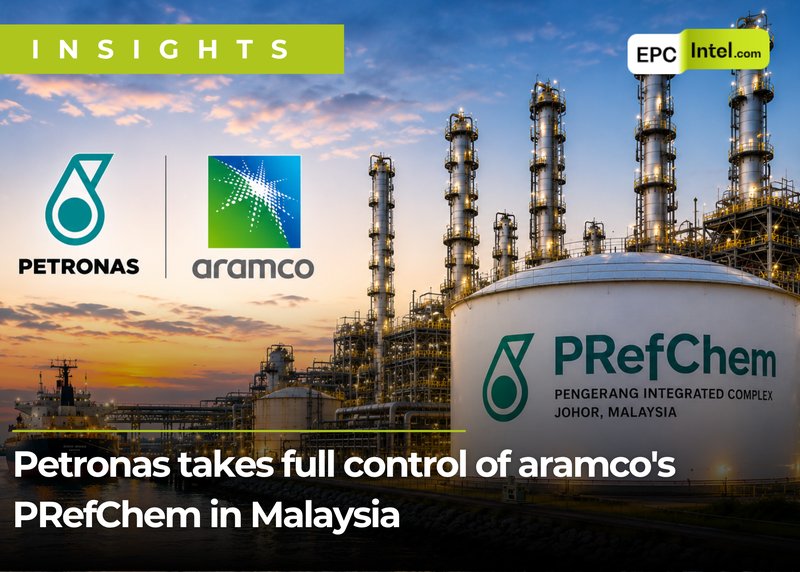
Petronas is taking full ownership of PRefChem, and while this is technically an equity transfer, the strategic meaning is much bigger than a simple shareholder reshuffle.
Aramco is transferring its stakes in Pengerang Refining Company and Pengerang Petrochemical Company to Petronas, giving the Malaysian national oil company complete control of one of the country’s most important downstream assets. PRefChem sits inside the Pengerang Integrated Complex in Johor, a major refining and petrochemical hub that has long been positioned as a cornerstone of Malaysia’s downstream industrial ambitions.
The transaction also says something about where major energy companies are putting their attention. Petronas is consolidating strategic domestic assets. Aramco is optimizing its global downstream portfolio. Both companies are keeping the door open for future cooperation, but the ownership structure is changing in a way that gives Petronas much more room to move.
Why it matters
PRefChem is not a marginal asset.
The complex includes around 300,000 barrels per day of refining capacity and approximately 3.4 million tonnes per year of petrochemical production capacity. That gives Petronas direct control over a large integrated refining and chemicals platform at a time when downstream margins, feedstock flexibility, product placement and supply security are all becoming more important.
For Malaysia, the asset also has strategic value beyond earnings. Pengerang supports domestic energy security, industrial resilience and the broader positioning of Johor as a downstream and petrochemical hub. Full ownership gives Petronas a clearer line of control over operating decisions, maintenance planning, future debottlenecking, feedstock strategy and potential downstream expansion.
This is the type of move that can look quiet on paper but matter a lot when the next cycle of brownfield spending begins.
What changes
The most immediate change is governance.
A 50:50 joint venture can work well when objectives are aligned, but it can also slow decisions when market conditions shift quickly. Full ownership gives Petronas more flexibility to prioritize operational performance, supply chain integration and long-term domestic industrial strategy without having to balance every decision against a partner’s broader global portfolio.
That matters in downstream. Refineries and petrochemical complexes are not static assets. They need constant maintenance, turnaround planning, reliability upgrades, digital systems, environmental compliance spending, utilities optimization and periodic capacity or product slate adjustments.
The ownership change may not immediately trigger a major EPC wave, but it improves the probability of a more Petronas-led investment roadmap for PRefChem over time.
EPC opportunity
For EPC contractors, this is not yet a clean new-build award story. It is more of a positioning signal.
The more interesting opportunity is what comes after ownership consolidation. Large integrated downstream assets typically create recurring capital spend across reliability, utilities, process optimization, emissions reduction and product flexibility. That can generate steady work for engineering houses, maintenance contractors, specialist equipment suppliers and package vendors.
Based on typical downstream brownfield capital allocation, future spend at PRefChem could fall across several likely workstreams:
Process unit revamps and debottlenecking could account for 25 percent to 35 percent of future capital packages, especially if Petronas seeks higher utilization, better yields or improved petrochemical integration.
Utilities, offsites and infrastructure could represent 20 percent to 30 percent, covering power, steam, water treatment, storage, flare systems, loading facilities and interconnecting infrastructure.
Maintenance, reliability and turnaround related works could absorb 15 percent to 25 percent, particularly across rotating equipment, heat exchangers, compressors, pumps, piping and inspection driven replacement.
Environmental and efficiency upgrades could take 10 percent to 20 percent, including emissions control, energy efficiency, wastewater handling and carbon intensity reduction measures.
Digital, automation and control systems could represent 5 percent to 10 percent, covering advanced process control, safety systems, asset integrity platforms and operational data integration.
The real prize for contractors will be getting embedded early in Petronas’ post-transaction asset strategy. Framework contractors, local Malaysian fabricators, specialist maintenance providers, process licensors and equipment OEMs should all be watching closely.
Aramco angle
For Aramco, the move looks less like a retreat from Malaysia and more like portfolio discipline.
The company remains one of the world’s most important downstream players, but global downstream capital is being reviewed more carefully. Refining and petrochemical assets must compete for capital against upstream growth, gas, liquids-to-chemicals, trading, global supply priorities and shareholder returns.
Aramco exiting the equity position while maintaining commercial crude supply arrangements and potential collaboration channels suggests a more selective approach. It can preserve commercial exposure without remaining tied to asset ownership in the same way.
That is a very different posture from the last downstream expansion cycle, when national oil companies were racing to secure integrated refining and chemicals positions across Asia.
What to watch
The biggest question now is what Petronas does with full control.
If the priority is operational resilience, contractors should expect a focus on reliability, turnarounds, utilities and maintenance optimization. If the priority is downstream growth, the asset could become a platform for further petrochemical expansion or product slate upgrades. If the priority is energy security, Petronas may focus on domestic supply integration, crude flexibility and inventory resilience.
The transaction does not end the Petronas-Aramco relationship. The companies are still expected to explore collaboration in crude oil supply, technology exchange and integrated product distribution. But it does shift the center of gravity at PRefChem firmly toward Kuala Lumpur.
For EPCIntel.com, the key takeaway is simple: this is not just a corporate ownership change. It is a downstream control event.
And control usually comes before capital planning.