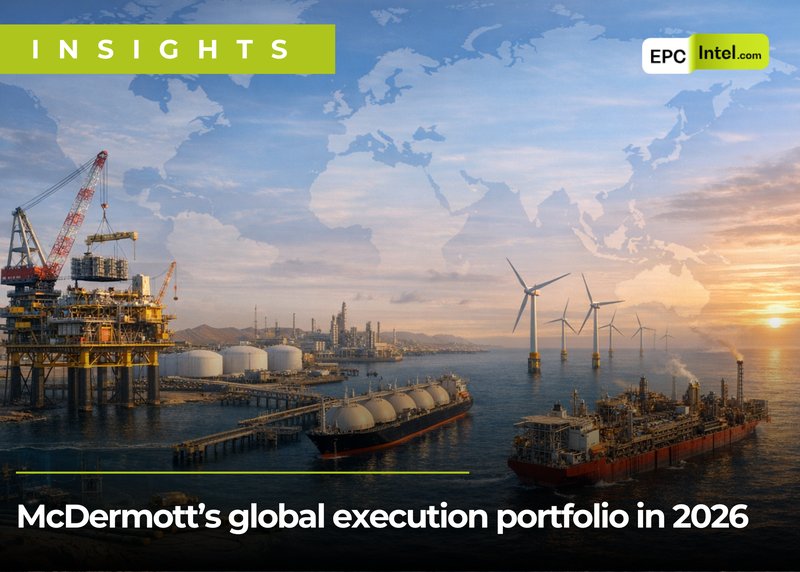
McDermott International enters 2026 with one of the most geographically diversified execution portfolios among offshore EPC contractors. The company is simultaneously advancing major offshore oil and gas expansions in the Middle East, subsea and deepwater developments in Asia, LNG infrastructure in North America and the Middle East, and offshore wind grid infrastructure in Europe.
This broad exposure reflects a strategic balance between traditional offshore energy projects and emerging infrastructure linked to LNG and energy transition markets. According to EPCIntel.com‘s EPC & FEED contract database, as of early 2026, several large scale EPCI contracts are progressing across McDermott’s fabrication yards and offshore installation fleet.
Middle East offshore projects dominate value
The Middle East remains the largest contributor to McDermott’s backlog, driven by major offshore developments for ADNOC, QatarEnergy and Saudi Aramco.
The Nasr 115 expansion project for ADNOC, awarded in January 2026, is currently in early EPCI execution. The project supports offshore production expansion at the Nasr field in Abu Dhabi and is estimated to carry a contract value of approximately $900 million to $950 million.
In Qatar, McDermott continues to execute pipeline and power cable infrastructure for the North Field Production Sustainability program. This large subsea installation scope is estimated between $750 million and $1.5 billion and forms part of QatarEnergy’s long term strategy to sustain production from the world’s largest gas field.
Saudi Aramco’s Marjan Increment Program remains one of McDermott’s most significant offshore developments. Packages 1 and 4, with a combined value exceeding $3 billion, are approaching final construction and offshore installation phases ahead of completion expected during 2026. The project involves new production platforms, subsea pipelines, offshore processing facilities and power infrastructure.
These Middle Eastern programs collectively represent the largest portion of McDermott’s current execution portfolio and continue to generate steady demand for offshore platform fabrication, subsea pipelines and installation services.
Asia Pacific deepwater and gas developments
In Asia Pacific, McDermott is executing several offshore gas and deepwater developments.
The Kelidang gas field project for PETRONAS Carigali transitioned from FEED into full EPCIC execution in late 2025. Located offshore Brunei, the development supports regional gas supply and involves offshore platform installation and subsea infrastructure. The contract value is estimated to approach $1 billion.
India’s KG DWN 98 2 deepwater development for ONGC is another key offshore program under execution. McDermott’s scope includes subsea structures, pipelines and offshore installation works supporting one of India’s largest deepwater gas developments. The contract value is estimated above $500 million and the project is currently moving through installation activities.
In Australia, the Scarborough Floating Production Unit for Woodside Energy has entered the final integration and commissioning phase. This contract, estimated between $750 million and $1 billion, includes engineering, procurement, construction and integration of the floating production facility that will process gas from the Scarborough field before export to the Pluto LNG expansion.
LNG and onshore energy infrastructure
McDermott is also expanding its presence in LNG infrastructure and onshore processing facilities.
The Woodfibre LNG project in British Columbia represents one of the company’s most significant onshore energy projects in North America. McDermott is responsible for major EPC scopes including engineering, module fabrication and integration works. The EPC value is estimated to exceed $500 million as fabrication activities progress across multiple module yards.
In Oman, the Marsa LNG project led by TotalEnergies is progressing through early construction phases. The project will develop a 1.6 million tonne per annum LNG facility aimed at supplying marine bunkering fuel in the region. McDermott’s EPC scope is estimated above $500 million and includes process facilities and supporting infrastructure.
Offshore wind and energy transition exposure
McDermott’s portfolio also includes growing participation in offshore wind and low carbon fuels.
The BorWin6 offshore grid connection project for TenneT represents one of the company’s largest renewable energy infrastructure contracts. The EPCI scope involves fabrication of a 980 MW offshore converter station that will transmit power from North Sea wind farms to the German grid. The contract value is estimated between $750 million and $1 billion.
Meanwhile, the Turbe e SAF project in Rotterdam marks McDermott’s entry into sustainable aviation fuel infrastructure through a FEED contract awarded by Metafuels in late 2025. While still in early engineering, the project reflects increasing EPC opportunities linked to synthetic fuels and decarbonized aviation supply chains.
Outlook for EPC contractors
Taken together, McDermott’s current portfolio illustrates how offshore EPC contractors are balancing traditional oil and gas developments with emerging energy infrastructure markets.
The company’s largest value exposure remains in Middle Eastern offshore expansions, particularly through Saudi Aramco and QatarEnergy programs. At the same time, LNG developments, offshore wind grid infrastructure and low carbon fuel facilities are gradually expanding the scope of EPC opportunities.
For suppliers and subcontractors, these projects represent significant opportunities across platform fabrication, subsea equipment, offshore installation, modular fabrication, power systems and process technology packages.
With several billion dollars of projects moving toward peak construction phases through 2026 and 2027, McDermott’s global execution pipeline remains one of the most active in the offshore EPC market.