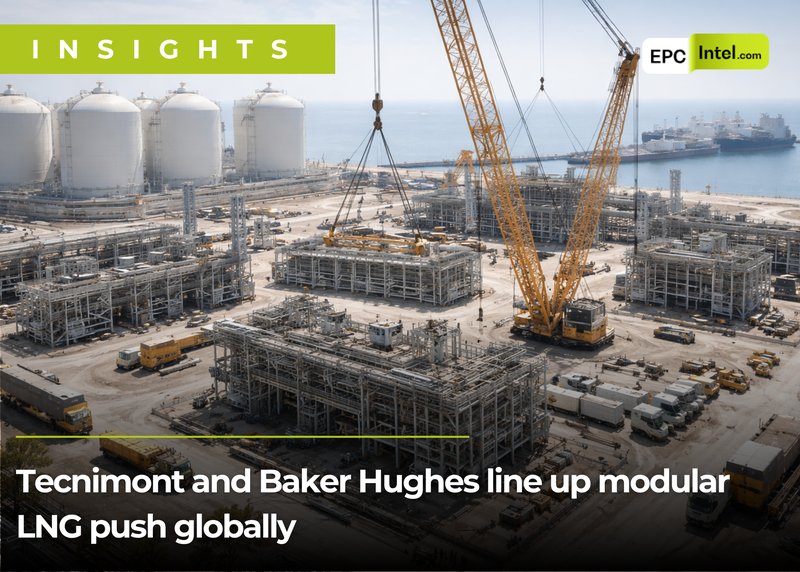
MAIRE has taken another measured step to position its engineering arm closer to where LNG project execution is heading. Its integrated E&C unit Tecnimont has signed a non-exclusive MoU with Baker Hughes to jointly pursue future modular and scalable LNG opportunities using Baker Hughes’ NMBL™ liquefaction solution.
It is a framework agreement that matters because it aligns two complementary pieces of the LNG puzzle, liquefaction technology and full-scope EPC delivery, at a time when buyers and developers are increasingly looking beyond mega trains.
Why modular lng keeps showing up in tenders
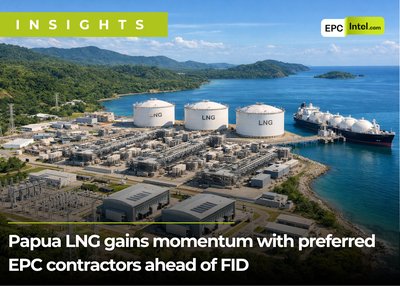
The global LNG market is still dominated by large onshore plants, but tender activity is clearly broadening. New demand is emerging from smaller resource bases, fast-track export schemes, power-linked LNG, and stranded gas monetization. These projects typically sit in the 0.5 to 3 mtpa range and they value speed, repeatability, and capex discipline over ultimate scale.
That is exactly where modular LNG concepts fit. By standardizing liquefaction units and packaging them for parallel fabrication, developers can reduce site work, shorten schedules, and in some cases phase capacity as markets develop. For EPC contractors, modular LNG is also a different execution game, with more work shifted to fabrication yards and a stronger emphasis on interface management and logistics.
The MoU explicitly targets this space, with Tecnimont and Baker Hughes jointly evaluating future LNG tenders that specify the NMBL modular liquefaction solution. The agreement sets out a structured approach to define scope splits, execution models, and bid strategies on a case-by-case basis.
How the partnership fits both sides
For Tecnimont, the logic is straightforward. The company has decades of experience delivering large and complex EPC projects across gas processing, LNG, petrochemicals, and downstream. Modular LNG allows it to extend that capability into a faster-moving, more repeatable project segment without having to develop proprietary liquefaction technology.
For Baker Hughes, partnering with a Tier 1 EPC contractor strengthens the bankability of its modular offering. Technology alone is rarely enough to win LNG projects. Developers want confidence that the entire facility, from liquefaction to utilities, storage, and export systems, can be executed under a single, coordinated delivery model.
The non-exclusive nature of the MoU also matters. It gives both companies flexibility to engage selectively, depending on geography, client preferences, and commercial structure.
What this means for EPC and suppliers
While early stage, the collaboration has clear implications for the EPC and supplier landscape.
A typical modular LNG project in the 1 to 2 mtpa range can carry a total installed capex of roughly USD 800 million to USD 1.5 billion, depending on location, storage, and export scope. Within that envelope, EPC-related spend often breaks down as follows, based on EPCIntel analysis of comparable projects:
• liquefaction modules and core process packages, 30 to 35 percent
• balance of plant, utilities, and offsites, 20 to 25 percent
• civil, structural, and modular fabrication, 15 to 20 percent
• electrical, instrumentation, and control systems, 10 to 15 percent
• construction, commissioning, and integration, 10 to 15 percent
This creates opportunities not just for the prime EPC, but also for module yards, heavy transport and logistics providers, E&I contractors, and OEMs supplying turbines, compressors, power generation, and control systems.
If Tecnimont and Baker Hughes are successful in converting this framework into awarded projects, expect increased competition among fabrication yards in Asia and the Middle East, as well as more standardized supplier lists tied to repeatable module designs.
Strategic context for MAIRE
At group level, the MoU fits MAIRE’s broader strategy of leaning into modularization, efficiency, and lower-carbon project execution. LNG remains a core transition fuel, particularly in regions seeking to displace coal and backstop intermittent renewables. Modular LNG strengthens that role by lowering barriers to entry and reducing time to first cargo.
CEO Alessandro Bernini’s comments underline this positioning, emphasizing flexible LNG capacity, security of supply, and sustainability. Importantly, modular LNG also aligns well with decarbonization pathways, as smaller plants are easier to electrify, integrate with low-carbon power, or retrofit with carbon capture over time.
Tecnimont and Baker Hughes have signed a non-exclusive MoU to jointly pursue modular and scalable LNG opportunities, aligning EPC execution strength with modular liquefaction technology as LNG tendering shifts toward smaller, faster, and more flexible project formats.What to watch next
The key question is conversion. MoUs in the LNG space are common, but only a fraction translate into bids and even fewer into awards. Signals to watch include joint pre-qualification activity, co-branded bid submissions, or references to specific regions such as North America, Africa, or Southeast Asia, where mid-scale LNG momentum is building.
For now, this agreement is a positioning move, but a well-timed one. As LNG developers push for faster, more flexible projects, the pairing of EPC execution depth with modular liquefaction technology is likely to feature more often in upcoming tenders.