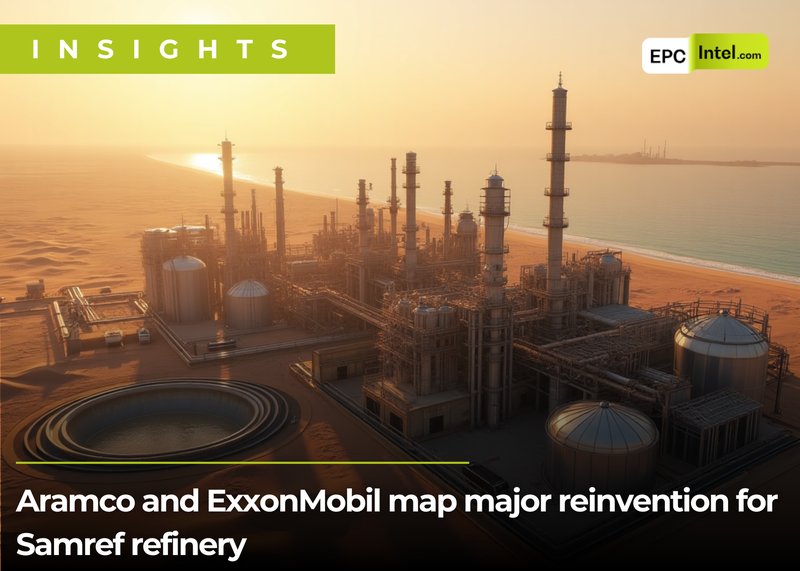
ExxonMobil, Aramco and Samref just cracked open the door to one of the Middle East’s biggest potential downstream reinventions. The Venture Framework Agreement to study a major upgrade of the Yanbu refinery and expand it into a fully integrated petrochemical complex signals that the long running Aramco Exxon partnership may now be preparing for its most ambitious project yet.
For EPC contractors across Saudi Arabia and further afield, this is the type of opportunity that rarely comes around. A 400 thousand barrels per day refinery is being positioned for a full liquids to chemicals leap, backed by two of the most technically sophisticated downstream operators on the planet. That combination usually means scale, complexity and years of engineering and construction work.
Why Samref is suddenly strategic again
Samref has always been a core downstream asset for the Kingdom. The refinery consistently pushes more than 400 thousand barrels per day of crude through its units and exports propane, diesel, marine heavy fuel oil and sulphur. But as Aramco’s downstream strategy sharpens around value uplift rather than pure fuels volumes, Samref looks like a prime candidate for a major upgrade.
Aramco Downstream President Mohammed Y. Al Qahtani made the motivation clear. The project would increase conversion of crude and petroleum liquids into high value chemicals while deepening the company’s national liquids to chemicals strategy. With Saudi Arabia seeking to expand its petrochemical capacity and grow non fuel value chains, Samref could become a flagship.
ExxonMobil is aligned. Senior Vice President Jack Williams framed the study as a chance to grow high value products that meet evolving global demand and support a lower emission future. When both partners see chemicals as the path forward, the trajectory becomes obvious.
FEED gates opening
The partners are launching a preliminary FEED program to explore the upgrade and integration scope. If this moves ahead, it will become one of the largest FEED packages to hit the region in years. Typical liquids to chemicals developments of this nature draw in a wide ecosystem of licensors, FEED houses and technology partners across hydrocracking, residue upgrading, steam cracking, aromatics, olefins and advanced emissions abatement.
Given the scale of Samref and the ambition to increase conversion, the FEED phase alone could last 18 to 24 months depending on technology selection and integration with existing assets.
What EPC could look like
Based on EPCIntel.com‘s refinery upgrade and liquids to chemicals benchmarks, a full scale redevelopment of a 400 thousand barrels per day facility into an integrated petrochemical hub typically lands between 12 billion and 20 billion dollars of total installed cost depending on final scope and product slate.
A representative breakdown using EPCIntel.com database averages suggests:
- Residue upgrading and hydrocracking units 3.5 to 5.5 billion dollars
- Steam cracker and downstream petrochemical units 4 to 7 billion dollars
- Aromatics, olefins and associated processing units 1.5 to 2.5 billion dollars
- Utilities, offsites and integration work 1 to 2 billion dollars
- Emissions reduction systems including carbon capture readiness and flue gas treatment 0.8 to 1.2 billion dollars
- Storage, pipelines and marine upgrades 0.5 to 1 billion dollars
These values fluctuate depending on technology licensors, integration constraints, emissions reduction strategy and local content requirements under the Kingdom’s supply chain policies.
The execution model will be equally significant. Mega refinery to petrochemical expansions often land as multi lot EPC packages to reduce single contractor exposure and accelerate schedule. This normally opens the door for at least four or five major EPC contractors alongside dozens of Tier 2 players for fabrication, modularisation, civil works, utilities and infrastructure.
Emissions reduction will carry weight in scope definition
The partners emphasised emissions reductions as a core part of the study. This usually means electrification of compressors where practical, large scale heat integration, flue gas treatment upgrades and readiness for future carbon capture solutions. These elements could materially expand EPC scope and create opportunities for specialised technology vendors.
Given Aramco’s public commitments on emissions intensity and its expanding CCUS activities, it would not be surprising to see a carbon capture package included as a later phase or modularised add on.
What to watch next
The initial FEED results will shape the project contours, but three signals will determine momentum. First, the selected technology licensors across cracking, hydroprocessing and steam cracking. Second, any early local content targets that influence contracting strategy. Third, the macro conditions that will drive final investment decisions at both Aramco and ExxonMobil.
If the partners advance the project, Samref could become one of the Gulf’s signature downstream investments of the decade. For now, contractors should pay close attention. A refinery first commissioned in the 1980s may be preparing for its most transformative chapter yet.