From unconventional resources to industrial-scale development
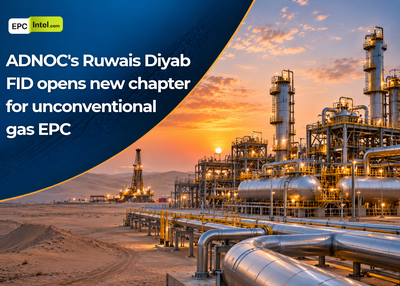
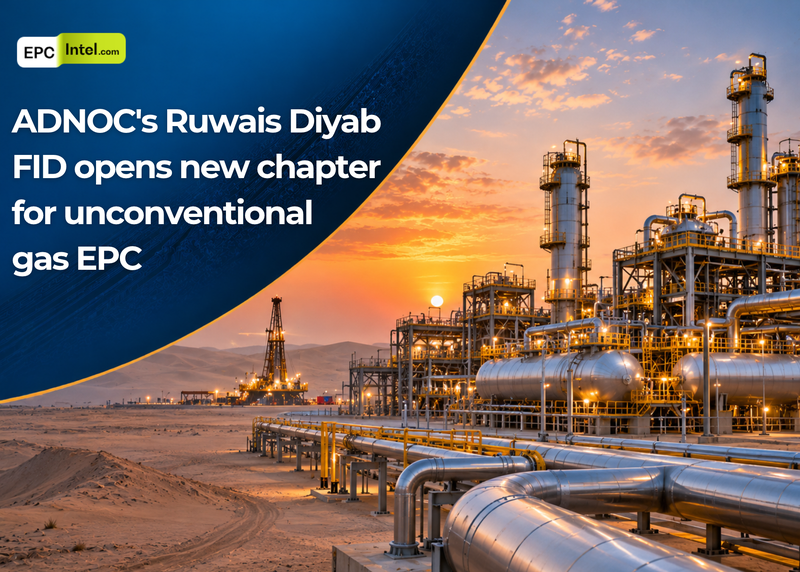
ADNOC’s final investment decision (FID) on the Ruwais Diyab Unconventional Gas Development marks another important step in Abu Dhabi’s increasingly ambitious gas investment programme.
Unlike conventional offshore gas developments, Ruwais Diyab presents a different kind of opportunity for the EPC supply chain. The project is built around developing tight gas reservoirs using advanced drilling, hydraulic fracturing and production technologies, supported by gathering networks, processing facilities and associated infrastructure.
The development is operated by ADNOC, which holds a 90% interest in the concession, alongside TotalEnergies with 10%.
The project has already demonstrated that unconventional gas can be successfully produced and treated in the UAE. The challenge now is turning that achievement into a sustained, commercially competitive production operation.
For contractors and suppliers, that transition could create an attractive combination of repeatable well development work and conventional EPC packages.
A different opportunity for EPC contractors
Ruwais Diyab is not simply another gas processing plant.
Unconventional developments require a continuous programme of drilling, completions and well connections, making the supply chain considerably more diverse than a typical standalone gas facility.
ADNOC Drilling is already positioned in the unconventional sector through Turnwell, its joint venture with SLB and Patterson-UTI. The venture has been involved in drilling unconventional wells using advanced hydraulic fracturing and digital technologies.
Enersol, ADNOC Drilling’s energy technology venture with Alpha Dhabi, also supports the wider unconventional development strategy.
This creates opportunities across several contracting areas, including wellsite construction, gas gathering pipelines, compression, gas treatment, produced-water management, electrical distribution and automation.
The important distinction is that involvement in existing drilling operations does not automatically translate into an award for the new development’s main EPC facilities.
Those scopes will need to be monitored separately as execution progresses.
Where the capital spending could go
The development’s verified total capital budget and detailed EPC package values were not available from the accessible announcement. However, comparable unconventional gas projects provide a useful indication of how expenditure could be distributed.
Based on indicative EPCIntel benchmarking, a development of this type could allocate approximately:
- 35% to 45% to drilling, completions, hydraulic fracturing and wellsite development.
- 15% to 20% to gas gathering networks, pipelines and related infrastructure.
- 15% to 25% to gas treatment, processing and compression facilities.
- 8% to 12% to utilities, electrical systems, water handling and automation.
- 8% to 12% to civil works, construction management, commissioning and supporting infrastructure.
These are preliminary planning ranges, not announced Ruwais Diyab contract allocations. Actual spending will depend on the drilling programme, processing configuration and use of existing infrastructure.
For equipment manufacturers, the most interesting opportunities could include reciprocating compressors, separators, pressure vessels, heat exchangers, valves, metering systems and modular gas treatment packages.
The repetitive nature of unconventional development also offers potential advantages for fabrication contractors capable of delivering standardized facilities across multiple well locations.
Part of Abu Dhabi’s wider gas investment wave
Ruwais Diyab is advancing alongside an already substantial programme of gas infrastructure investment.
ADNOC Gas has committed $13.2 billion to its Rich Gas Development programme, including major EPC awards to Wison Engineering and Tecnimont for new processing and NGL fractionation facilities.
Other developments, including Umm Shaif Gas Cap and Ruwais LNG, are expanding infrastructure across Abu Dhabi’s upstream, processing and export businesses.
For the engineering and construction industry, the significance extends beyond any single project.
ADNOC is simultaneously developing conventional reservoirs, unconventional resources, gas processing capacity and LNG export infrastructure. That creates demand for different types of contractors, technologies and equipment across an interconnected gas value chain.
Ruwais Diyab adds another dimension to that investment cycle.
The next opportunity for suppliers
The biggest question now is how ADNOC will structure the development’s engineering, construction and equipment procurement.
Unlike large offshore projects dominated by a handful of major EPC contracts, unconventional gas development can create opportunities through numerous specialist packages and recurring procurement programmes.
Well services, modular processing equipment, pipeline construction, compression and water management could all become important areas for contractors to monitor.
The FID is an important milestone, but it should not be mistaken for confirmation that every EPC package has already been awarded.
For suppliers looking beyond Abu Dhabi’s established gas megaprojects, Ruwais Diyab could represent something particularly interesting: a development capable of generating not just a major construction programme, but sustained demand for equipment, services and infrastructure as production expands.